


Infertility refers to a reproductive disease that prevents a person or couple from achieving a successful pregnancy despite regular attempts. Infertility falls into distinct types, including primary infertility, secondary infertility, female infertility, male infertility, and unexplained infertility, each describing a different pattern of conception difficulty. The main symptoms include irregular menstrual cycles, pelvic pain, erectile dysfunction, low libido, and abnormal semen parameters, though many people with infertility have no obvious symptoms at all.
Causes of infertility range from ovulation disorders, tubal blockage, and endometriosis in women, to low sperm count, poor sperm motility, and hormonal imbalances in men, alongside shared risk factors like obesity, smoking, and chronic disease. Diagnosis typically combines a woman’s hormone profile, ultrasound, and tubal imaging with a man’s semen analysis and hormone testing to pinpoint the underlying cause.
Prevention of infertility centers on maintaining a healthy weight, avoiding tobacco and excess alcohol, treating infections early, and tracking ovulation, alongside checking with a doctor before problems become harder to reverse. Treatment options for infertility include lifestyle changes, medication, intrauterine insemination (IUI), in vitro fertilization (IVF), and intracytoplasmic sperm injection (ICSI), selected based on the specific cause identified during diagnosis for both men and women.
What Is Infertility?
Infertility is a reproductive disease defined by the clinical failure to achieve a successful pregnancy after 12 months of regular unprotected intercourse, or after 6 months for women over 35. According to the World Health Organization (WHO), “Infertility is a disease of the male or female reproductive system defined by the failure to achieve a pregnancy after 12 months or more of regular unprotected sexual intercourse.” Quoted by Dr. Vijay Eknath Takale a gynecologist and infertility specialist, “Infertility is defined as a couple who are trying for baby and having a regular sexual intercourse without using any protection for a year or more than that and still not able to conceive are labeled as infertile couples.”
The main reasons behind infertility involve disruptions to ovulation, sperm production, or the structural integrity of the reproductive system that prevent conception from occurring. According to the World Health Organization’s comprehensive epidemiological review of global prevalence data, the worldwide burden of infertility affects approximately 17.5% of the adult population, impacting roughly 1 in 6 people globally across both high- and low-income countries.
How Does Pregnancy Normally Occur?
Pregnancy normally occurs when a released egg is fertilized by sperm and the resulting embryo implants successfully in the uterine lining. Conception begins with ovulation, when a mature oocyte is released from the ovary roughly midway through the menstrual cycle.
Sperm deposited during intercourse travel through the anatomical pathways of the female reproductive tract to reach and fertilize the oocyte in the fallopian tube, forming an embryo that spends several days dividing as it travels toward the uterus. This entire process, including ovulation, fertilization, and implantation, is governed by precise hormonal regulation that rises and falls in step with each phase of the menstrual cycle.
What is The Anatomy of the Reproductive System?
The anatomy of the reproductive system comprises a network of internal and external organs, glands, and hormones that work together to enable human reproduction, and it differs structurally between males and females. In females, the ovaries store and release eggs, as well as produce reproductive hormones. The fallopian tubes carry eggs toward the uterus and are the usual site of fertilization. The uterus houses and nourishes a developing pregnancy. The cervix, vagina, and external genitalia (vulva) form the birth canal along with the protective outer structures. Together, these components form the anatomical basis for several types of infertility when any part malfunctions.
In males, the testes produce sperm and testosterone inside the scrotum, which regulates temperature for healthy sperm development, while the epididymis matures sperm and the vas deferens transports it; the seminal vesicles and prostate gland contribute fluid to semen, and the urethra and penis deliver sperm during intercourse.
What are The Types of Infertility?
The types of infertility include primary infertility, secondary infertility, female infertility, male infertility, and unexplained infertility.
The types of infertility are listed below.
- Primary Infertility: Primary infertility is the inability to achieve a first pregnancy despite at least 12 months of regular unprotected intercourse. It describes a couple who has never conceived a pregnancy, regardless of how long they have been trying. The cause may originate in either partner or result from a combination of factors affecting both.
- Secondary Infertility: Secondary infertility refers to the inability to conceive again after a previous successful pregnancy, whether or not that pregnancy resulted in a live birth. It occurs when a couple who previously conceived, with the same or a different partner, is unable to conceive again after 12 months of trying. Underlying causes often include age-related decline, new reproductive conditions, or complications from a prior pregnancy or surgery.
- Female Infertility: Female infertility is the inability to conceive or carry a pregnancy to term due to a condition affecting the female reproductive system. Female infertility commonly stems from ovulation disorders that prevent regular egg release, along with diminished ovarian reserve, structural problems in the uterus, or blockages in the fallopian tubes. These causes can act alone or in combination, which is why a full evaluation is usually needed to identify the source.
- Male Infertility: Male infertility is the inability to conceive due to a problem with sperm production, function, or delivery in the male reproductive system. Male infertility typically involves sperm problems such as low count or poor movement, hormonal factors like abnormal testosterone levels, or structural testicular disorders that impair sperm development. Because sperm health can change over time, repeat testing is often part of confirming a male-factor diagnosis.
- Unexplained Infertility: Unexplained infertility refers to a diagnosis given when a couple cannot conceive despite normal results across standard fertility testing. Unexplained infertility is typically diagnosed only after a full fertility evaluation rules out ovulation, tubal, uterine, and sperm-related causes, yet the couple still cannot conceive. In many of these cases, researchers believe subtle, hard-to-detect biological factors, such as egg or sperm quality issues not captured by standard tests, are responsible. This pattern is sometimes called idiopathic infertility, where symptoms are either absent or too subtle to detect.
What are The Symptoms of Infertility?
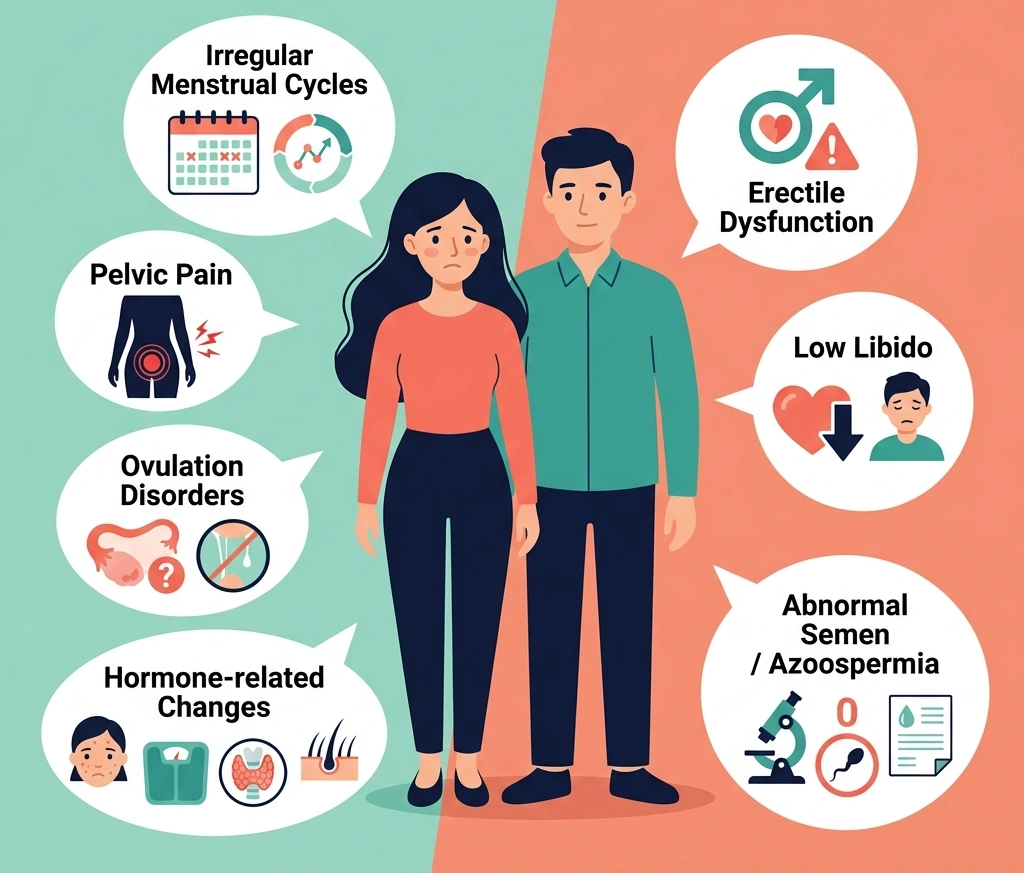
The symptoms of infertility include irregular menstrual cycles, pelvic pain, erectile dysfunction, low libido, and abnormal semen findings, though infertility can also be entirely symptom-free.
The symptoms of infertility are listed below.
- Irregular Menstrual Cycles: Irregular menstrual cycles are one of the clearest infertility signs in women, since consistent ovulation typically produces a predictable cycle length. Cycles that are unusually short, long, or absent altogether often point to an underlying ovulation disorder. Tracking cycle length over several months is one of the simplest ways to flag a potential problem early.
- Pelvic Pain: Pelvic pain that occurs outside of normal menstrual cramping can signal conditions such as endometriosis or pelvic inflammatory disease, both of which are linked to infertility. The pain may be constant or may flare specifically during intercourse or menstruation. Persistent pelvic pain should prompt an evaluation rather than being managed with pain relief alone.
- Ovulation Disorders: Signs of an ovulation disorder include unpredictable cycle timing, minimal or absent cervical mucus changes, and the absence of typical mid-cycle ovulation symptoms. Because ovulation disorders are a leading cause of female infertility, these signs are often the first clue that prompts fertility testing. Hormone testing can usually confirm whether ovulation is occurring at all.
- Erectile Dysfunction: Erectile dysfunction is the consistent inability to achieve or maintain an erection sufficient for intercourse. This can both cause and reflect underlying fertility problems in men. It frequently overlaps with hormonal imbalances, such as low testosterone, that also affect sperm production. Because it can stem from vascular, psychological, or hormonal causes, it usually warrants a broader health evaluation.
- Low Libido: A noticeable and sustained drop in sexual desire can be an early infertility sign in both men and women, often tied to a hormone imbalance. In men, low libido frequently accompanies low testosterone, while in women it can reflect disruptions in estrogen or thyroid function. On its own, low libido is rarely diagnostic, but combined with other signs it strengthens the case for testing.
- Abnormal Semen Findings (Azoospermia): Azoospermia is the complete absence of sperm in the ejaculate and is a symptom typically discovered only through semen analysis rather than through anything a man would notice on his own. It can result from a blockage in the reproductive tract or from a problem with sperm production itself, and distinguishing between the two changes the treatment path. Because there are no outward signs, semen analysis remains the only reliable way to detect it.
- Hormone-related Changes: Visible hormone shifts, such as unexplained weight change, acne, or excess facial or body hair in women, or reduced muscle mass and fatigue in men, can point to a fertility-affecting hormonal disorder. These changes often develop gradually, making them easy to dismiss until a fertility evaluation connects the dots. Reporting them during a workup helps narrow down which hormone panel to run first.
What Hormones Affect Fertility?
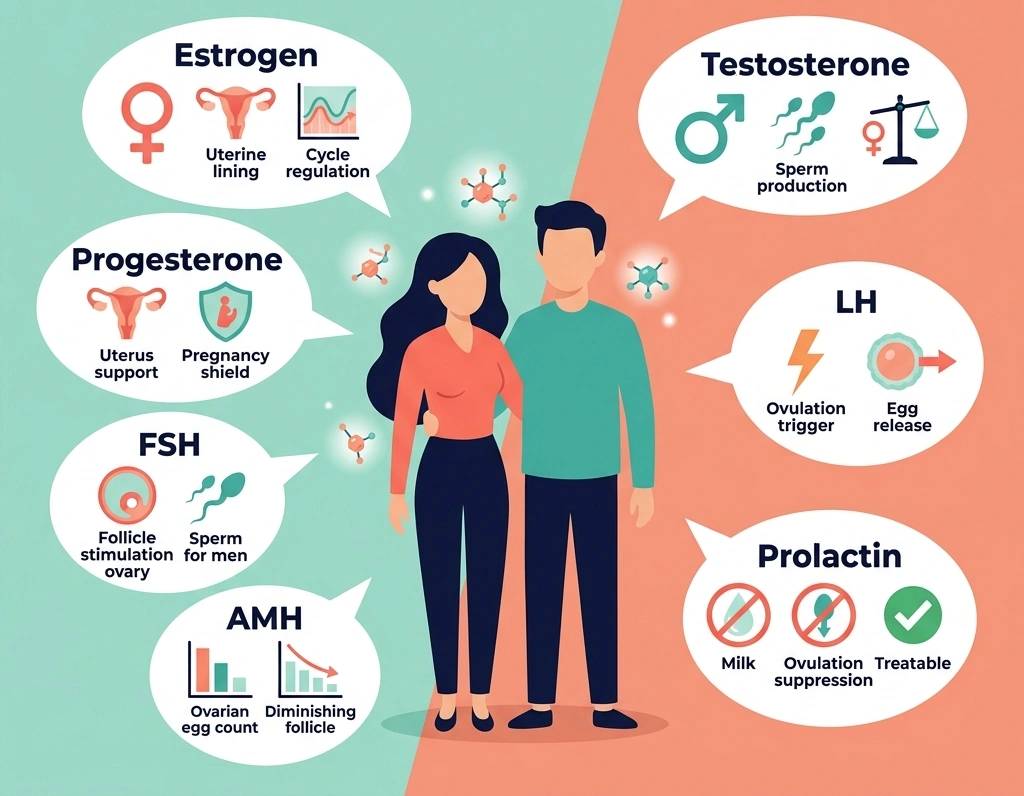
The hormones that affect fertility include Estrogen, Progesterone, Testosterone, FSH, LH, AMH, and Prolactin.
The hormones that affect fertility are listed below.
- Estrogen: Estrogen is the primary female sex hormone responsible for regulating the menstrual cycle and preparing the uterine lining for implantation. Estrogen levels that are too high or too low can disrupt ovulation and reduce the chances of conception.
- Progesterone: Progesterone is the hormone that maintains the uterine lining after ovulation to support a potential pregnancy. Insufficient progesterone can prevent implantation or lead to early pregnancy loss, even when fertilization occurs successfully.
- Testosterone: Testosterone is the primary male sex hormone that drives sperm production and libido in men. In women, testosterone is present in smaller amounts, and either an excess or a deficiency in either sex can impair fertility.
- FSH (Follicle-stimulating Hormone): FSH is the hormone that stimulates egg development in women and sperm production in men. Elevated FSH levels in women are often an early marker of declining ovarian reserve.
- LH (Luteinizing Hormone): LH is the hormone responsible for triggering ovulation in women and stimulating testosterone production in men. An imbalanced LH surge can prevent egg release entirely, disrupting the timing needed for conception.
- AMH (Anti-Müllerian Hormone): AMH is a hormone produced by ovarian follicles that serves as a reliable indicator of a woman’s remaining egg supply. Low AMH levels suggest a diminished ovarian reserve, which can narrow the window for natural conception.
- Prolactin: Prolactin is a hormone primarily associated with milk production that can suppress ovulation when levels are abnormally elevated outside of pregnancy or breastfeeding. Excess prolactin is a treatable cause of irregular cycles and reduced fertility in both men and women.
What are The Causes of Infertility?
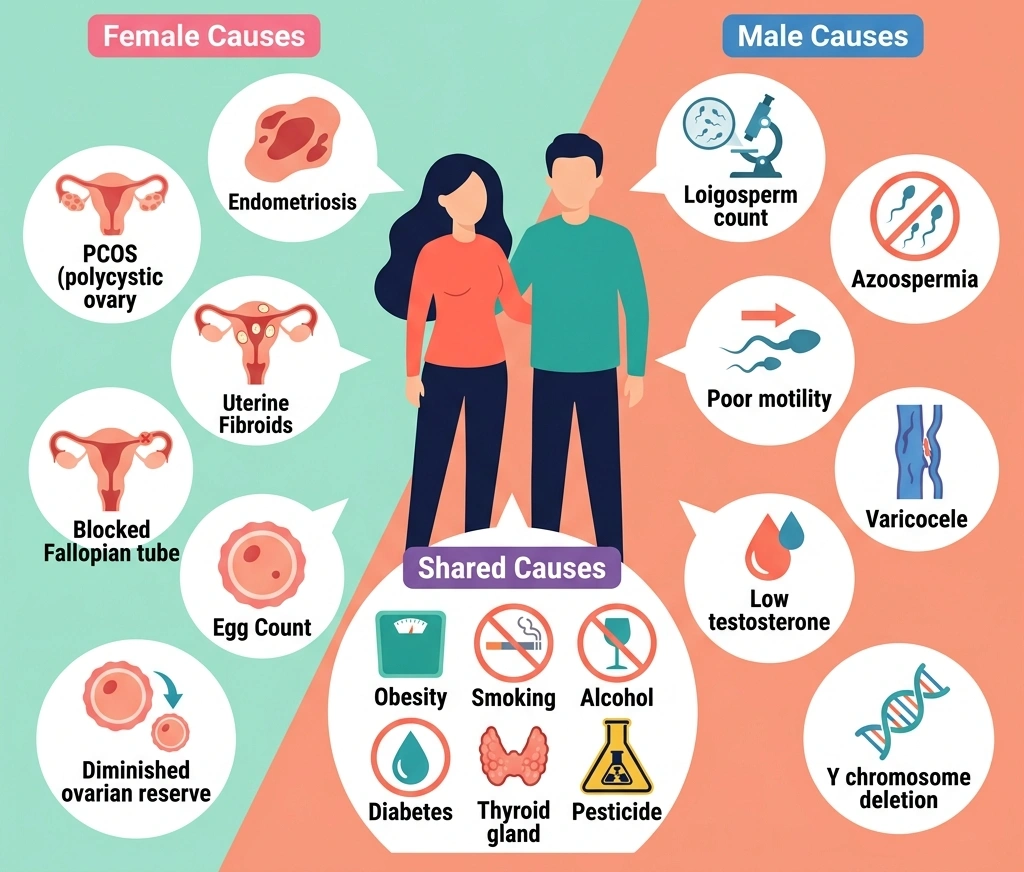
The causes of infertility include female reproductive conditions, male reproductive conditions, and a range of shared lifestyle and medical risk factors.
The common causes of infertility are listed below.
- Female Causes: Female causes of infertility refer to reproductive-system conditions that prevent regular ovulation or block the path an egg must travel to be fertilized and implanted. This category includes PCOS, a hormonal disorder that commonly causes anovulation and irregular ovulation disorders; endometriosis, which inflames pelvic tissue and can scar the fallopian tubes; uterine fibroids, which distort the uterine cavity; and tubal blockage stemming from pelvic inflammatory disease or a prior infection. Additional contributors include diminished ovarian reserve and premature ovarian insufficiency, which reduce ovarian reserve over time, along with genetic conditions such as Turner syndrome and poor-quality cervical mucus that prevents sperm from reaching the fallopian tubes.
- Male Causes: Male causes of infertility refer to conditions that impair sperm production, sperm function, or the physical delivery of sperm during intercourse. This category includes oligospermia, or low sperm count, and azoospermia, the complete absence of sperm, along with poor sperm motility (asthenozoospermia) and abnormal sperm morphology (teratozoospermia) that reduce a sperm’s ability to reach and fertilize an egg. Additional causes include varicocele, an enlarged scrotal vein that raises testicular temperature and impairs sperm quality; blockages in the epididymis or vas deferens that prevent sperm from being ejaculated; low testosterone and erectile dysfunction; and genetic conditions such as Y chromosome microdeletion and Klinefelter syndrome.
- Shared Causes: Shared causes of infertility refer to lifestyle, medical, and environmental risk factors that reduce fertility in both men and women rather than affecting one reproductive system alone. Lifestyle-related contributors include obesity, smoking, and heavy alcohol use, along with chronic conditions such as diabetes and thyroid disorders, all of which disrupt hormonal balance. Environmental and medical exposures, including oxidative stress, endocrine disruptors, pesticides, chemotherapy, and infections such as chlamydia, can damage reproductive tissue and impair fertility in either partner.
What are The Risk Factors for Infertility?
The risk factors for infertility are listed below.
- Maternal Age: Advanced maternal age is one of the strongest predictors of infertility risk, since egg quantity and quality decline steadily with reproductive aging, especially after age 35.
- Paternal Age: Advanced paternal age is linked to gradually declining sperm quality and a modestly higher infertility risk, even though male fertility declines more slowly than female fertility.
- BMI: A body mass index (BMI) that is significantly above or below the healthy range can disrupt hormone levels and ovulation, raising infertility risk in both men and women.
- Environmental Toxins: Exposure to environmental toxins such as pesticides, industrial chemicals, and heavy metals can interfere with hormone signaling and reduce fertility over time in both sexes.
- Sexually Transmitted Infections: Untreated sexually transmitted infections, particularly chlamydia and gonorrhea, can cause scarring and blockage in the reproductive tract, making early diagnosis and treatment critical to preserving fertility.
How Is Infertility Diagnosed?
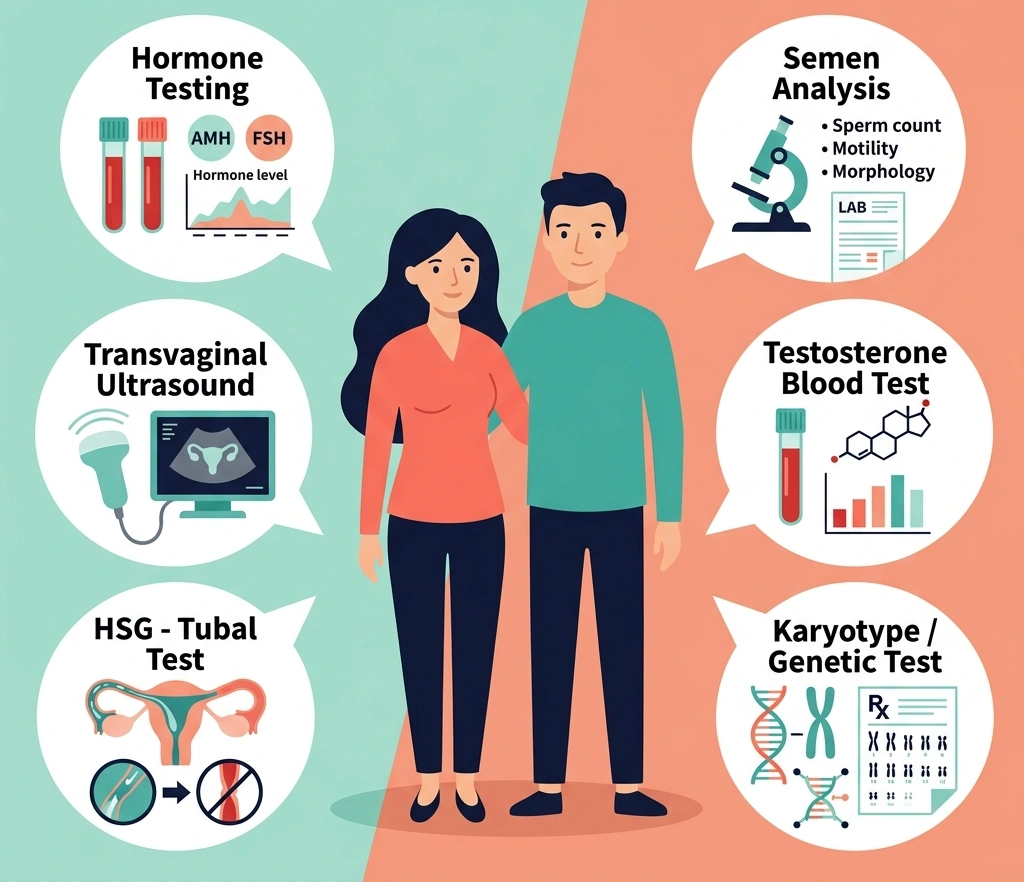
The methods followed to diagnose infertility include a combination of hormone testing, imaging, and semen analysis tailored to each partner.
The methods followed to diagnose infertility are listed below.
- Female Diagnosis: Female diagnosis refers to the set of tests used to evaluate a woman’s ovarian reserve, hormone levels, and reproductive anatomy for signs of infertility. These evaluations typically include a hormone profile measuring AMH and FSH to estimate ovarian reserve, a transvaginal ultrasound to examine the ovaries and uterus, and hysterosalpingography to confirm whether the fallopian tubes are open.
- Male Diagnosis: Male diagnosis refers to the set of tests used to evaluate a man’s sperm health and hormonal function for signs of infertility. The primary test is semen analysis, which measures sperm concentration, motility, and morphology, supported by blood testing for testosterone and, when a genetic cause is suspected, karyotype testing to guide early prevention and treatment decisions.
How to Prevent Infertility?
To prevent infertility, follow the tips listed below.
- Maintain a Healthy Weight: Keeping BMI within a healthy range helps support stable ovulation and hormone balance in both men and women, lowering overall infertility risk.
- Avoid Smoking and Alcohol: Both smoking and alcohol use are linked to reduced egg quality, lower sperm counts, and a higher risk of infertility over time.
- Treat Infections Promptly: Getting sexually transmitted infections diagnosed and treated quickly helps prevent the scarring and blockages that can permanently affect fertility.
- Manage Chronic Conditions: Keeping conditions such as diabetes and thyroid disorders well controlled protects the hormonal balance that ovulation and sperm production depend on.
- Limit Environmental Toxin Exposure: Reducing contact with pesticides, industrial chemicals, and other endocrine disruptors where possible helps protect long-term reproductive health.
- Track Ovulation and Cycle Patterns: Monitoring menstrual cycle regularity makes it easier to notice ovulation problems early, before they become harder to treat.
- Check With a Doctor Early: Checking with a doctor as soon as a pattern of difficulty conceiving emerges, rather than waiting, gives the widest range of treatment options.
When To See a Doctor for Infertility?
You should see a doctor for infertility if you are under 35 and have not conceived after 12 months of trying, or 35 or older and have not conceived after 6 months. Immediate evaluation is also recommended for irregular menstrual cycles, recurrent miscarriage, known reproductive disorders, pelvic pain, or an abnormal semen analysis, since these signs suggest a specific cause worth addressing sooner. Seeing a doctor early widens the range of treatment options available and can shorten the overall path to a successful pregnancy.
What Are the Best Treatments for Infertility in India?
The best treatments for infertility in India include lifestyle changes, medications, IUI, IVF, ICSI, surgical treatments, and fertility preservation options such as egg and sperm freezing.
The best treatments for infertility in India are listed below.
- Lifestyle Changes: Lifestyle changes are often the first recommendation for couples with mild or unexplained infertility. Doctors typically advise Lifestyle Changes involving weight management, smoking cessation, and reduced alcohol intake before moving to medical intervention.
- Medications: Medications are prescribed to correct hormonal imbalances or stimulate ovulation in women with ovulation disorders. Common Medications include clomiphene citrate and gonadotropins, which are often used as a first-line treatment before considering assisted reproductive technology (ART).
- IUI: IUI, or intrauterine insemination, places specially prepared sperm directly into the uterus around the time of ovulation to improve the chances of fertilization. IUI is generally recommended for mild male-factor infertility, unexplained infertility, or as an early step before IVF, at a lower cost range than more advanced procedures.
- IVF: IVF, or in vitro fertilization, involves stimulating the ovaries, retrieving eggs, fertilizing them with sperm in a laboratory, and transferring the resulting embryo into the uterus. IVF combines egg retrieval and embryo transfer into a single treatment cycle and is the most widely used form of assisted reproductive technology (ART) for both female- and male-factor infertility.
- ICSI: ICSI, or intracytoplasmic sperm injection, is a specialized form of IVF in which a single sperm is injected directly into an egg to achieve fertilization. ICSI is typically recommended for severe male infertility, including very low sperm count or poor sperm motility, when conventional IVF is unlikely to succeed.
- Surgical Treatments: Surgical treatments correct physical blockages or structural abnormalities that prevent natural conception. Surgical Treatments commonly address tubal blockage, uterine fibroids, endometriosis, and varicocele repair in men.
- Egg Freezing: Egg freezing preserves a woman’s eggs at their current quality for future use, typically before age-related decline or medical treatment affects them. Egg freezing is increasingly used both electively and medically, including before chemotherapy as part of Oncofertility planning.
- Sperm Freezing: Sperm freezing preserves a sample of a man’s sperm for future use in IUI, IVF, or ICSI. Sperm freezing is commonly recommended before medical treatments that could affect fertility, or simply as a precaution before advancing age reduces sperm quality.
- Oncofertility: Oncofertility is the specialized field focused on preserving fertility in patients about to undergo cancer treatment. Oncofertility typically combines egg freezing or sperm freezing with careful timing around chemotherapy or radiation to protect future fertility.
How Much Does Infertility Treatment Cost in India?
The cost of infertility treatment in India ranges from ₹1,50,000 to ₹3,00,000 depending on the diagnosis, treatment type, and number of cycles required. Initial consultations and diagnostic testing, including hormone panels and imaging, typically account for a smaller portion of the total and are usually billed separately before treatment begins.
Costs vary significantly by approach: medication-only cycles are the most affordable, IUI costs more due to the procedure itself, and IVF or ICSI represent the highest end of the range because of the lab work, monitoring, and embryo culture involved, a variation that generally tracks with each treatment’s success rate.
What Is the Success Rate of Infertility Treatment in India?
The success rate of infertility treatment in India is 35% to 60% per cycle, depending on the treatment type and the patient’s individual profile. Success rates vary meaningfully by age, underlying cause, and treatment type, with IVF and ICSI generally outperforming IUI for more complex cases, while younger patients see consistently higher rates across every treatment type. Early diagnosis and treatment generally improve outcomes, since delaying care often allows the underlying cause to progress and reduces the odds of success at every subsequent attempt.
How to Find Quality Infertility Treatment in India?
To find quality infertility treatment in India, prioritize clinics with transparent success rates, experienced specialists, and treatment plans matched to your specific diagnosis. It’s important to check accreditation, published success data by age group and treatment type, and clear, itemized treatment cost estimates before committing to a clinic.
Fertility Network helps infertility patients find quality and affordable fertility treatment options near them in India, connecting patients with vetted clinics based on their specific type of infertility, symptoms, and causes of infertility. Whether you’re pursuing early diagnosis after noticing early signs or exploring prevention strategies before problems develop, comparing verified options through Fertility Network makes it easier to choose the right infertility treatment with confidence.